
Policy Blog
Policy Blog: Energy Policy and Political Landscape
This week, energy policy takes precedence as Australian political dynamics shift amidst rising costs and community concerns.

Polling
Preferred Prime Minister
As of late June 2026, Anthony Albanese leads with 33%, followed by Pauline Hanson at 23% and Angus Taylor at 11%. The aggregate 'Unsure' score stands at 23%, indicating a significant portion of the electorate remains undecided.
As of 22–26 Jun · RedBridge · Leadership approval polling · Wikipedia polling
- Anthony Albanese (Australian Labor Party) — 33% (+0.0 pts vs prior poll)
- Pauline Hanson (Pauline Hanson's One Nation) — 23% (+0.0 pts vs prior poll)
- Angus Taylor (Liberal Party of Australia) — 11% (+0.0 pts vs prior poll)
- Unsure — 23%
Top 3 party leaders + Unsure, per Wikipedia Preferred PM tables.
Weekly Political Pulse
Energy
This week's Political Pulse focuses on the critical energy policy discussions that impact everyday Australians.
400 statements · All statements this week
This week, energy policy has taken center stage in Australian politics, with implications that reach into the daily lives of families and communities across the nation. As the government and opposition parties grapple with the best path forward, the decisions made now will significantly affect household budgets, employment opportunities, and the overall economic landscape.
- Rising energy costs continue to burden households, making it essential for the government to implement policies that stabilize prices and ensure accessibility for all Australians.
Families are feeling the pinch, with many struggling to manage their monthly expenses as energy bills soar.
- The push for renewable energy sources, such as wind and solar, is gathering momentum, but it raises concerns about potential job losses in traditional sectors.
Workers in coal and gas industries may face uncertainty as the transition occurs, highlighting the need for robust retraining programs to support affected workers.
- The government's commitment to Free TAFE and job creation is a step towards addressing employment concerns in the energy sector.
However, the effectiveness of these initiatives will depend on how well they are communicated and executed, particularly in regions heavily reliant on fossil fuels.
- The debate around energy infrastructure investment is heating up, with calls for more transparency and accountability in how public funds are allocated.
Communities want assurance that investments will lead to tangible benefits, such as improved energy security and job opportunities.
- The political landscape is shifting, with One Nation gaining traction and presenting alternative views on energy policy.
This shift in voter sentiment may compel major parties to re-evaluate their strategies and engage more directly with community concerns regarding energy production and environmental impact.
As we look ahead, the focus will be on how the government responds to the growing demands for affordable energy and sustainable job creation. With One Nation's rising popularity, traditional parties may need to recalibrate their approaches to resonate with voters who are increasingly concerned about energy issues. The coming weeks will be critical in shaping the narrative around energy policy and its implications for Australian households.
Policy
New & Updated Policies
There were no new policy divergences this week, but ongoing discussions around energy and its implications for households continue.
- Integrity and accountability — one-nation
One Nation emphasises accountability of major parties and institutions. Distinct redesign of NACC powers or donation law is not recorded as numbered schedules in our database. - Defence and national security — one-nation
One Nation supports strong national defence and border protection. Distinct alternative acquisition programs beyond general support are limited in our database.
Relevant Impact Framework pillars: National security / borders. - Immigration — one-nation
One Nation advocates substantially cutting immigration to reduce the number of new arrivals to Australia. The party supports lowering overall immigration levels to prioritize Australian workers and reduce pressure on infrastructure and services. - Jobs and wages — one-nation
One Nation links job availability for Australians to migration settings and local-preference hiring. Distinct Fair Work Act redesign schedules are not recorded in our database.
Relevant Impact Framework pillars: Jobs / wages; National security / borders. - Childcare and family payments — one-nation
One Nation emphasises parental choice in care arrangements. Distinct Child Care Subsidy or Parental Leave Pay redesign schedules are not recorded in our database.
Relevant Impact Framework pillars: Education. - Aged care — one-nation
One Nation states support for improved aged care for Australians. Distinct redesign of Support at Home fees or Age Pension assets tests is not recorded in our database.
Relevant Impact Framework pillars: Health / aged care. - Tax and superannuation — one-nation
One Nation’s recorded stance opposes additional taxes on superannuation and retirees. Concrete alternative rate tables or contribution-cap redesigns are not in our database.
Relevant Impact Framework pillars: Taxes / budget. - Climate and energy — one-nation
One Nation opposes rapid net-zero pathways that it argues raise power prices, and favours conventional fossil generation. Distinct alternative scheme designs are not detailed in our database.
Relevant Impact Framework pillars: Climate / environment. - Education and student debt — one-nation
One Nation criticises student debt burdens and university funding priorities. Distinct HELP indexation or threshold redesigns are not recorded as numbered schedules in our database.
Relevant Impact Framework pillars: Taxes / budget; Education. - Healthcare and Medicare — one-nation
One Nation states support for Medicare access for Australians. Distinct redesign of PBS co-payments or bulk-billing incentives is not detailed in our recorded platform rows.
Relevant Impact Framework pillars: Health / aged care.
Parliament
Votes This Week
Several votes were conducted this week, with outcomes that influence government funding and policy direction.
Question agreed to.
Result: Carried (Aye 88 / No 41)
BILLS 82 BILLS Cash Distribution Framework Bill 2026
Result: Negatived (Aye 40 / No 83)
The Cash Distribution Framework Bill 2026 aimed to establish a system for distributing cash benefits to support various sectors and families. However, the bill was not passed, meaning the proposed framework will not be implemented. As a re…
- Ambihaipahar, A.: no
- Templeman, S. R.: no
- Smith, M. J. H.: no
- Jordan-Baird, M. A. M.: no
- Giles, A. J.: no
- Neumann, S. K.: no
- Pasin, A.: aye
- Comer, E. L.: no
Question negatived.
Result: Negatived (Aye 42 / No 87)
Question agreed to.
Result: Carried (Aye 86 / No 47)
Question agreed to.
Result: Carried (Aye 74 / No 12)
Impact
What This Means for Australians
The focus on energy policy this week underscores the challenges facing Australian families as energy costs rise. With the government and opposition navigating these issues, the policies implemented now will have lasting effects on household budgets and the economy. The push for renewable energy sources is gaining traction, potentially reshaping job markets, especially for those in traditional energy sectors. As One Nation's influence grows, major parties may need to adjust their strategies to address community concerns and ensure sustainable job creation in the energy sector.
Next week
What to Watch Next Week
Watch for developments in energy policy discussions and how they may influence voter sentiment as we approach the next election cycle.
Media
Further Listening
Recent listening episodes provide context on current political events and public sentiment regarding energy and leadership.

Sky News Australia · 2026-08-14
Greta Thunberg labelled ‘ridiculous’ over obnoxious interview

The Karl Stefanovic Show · 2026-08-14
'Not Prime Ministerial': Panel Slams Anthony Albanese’s Japanese PM Comments
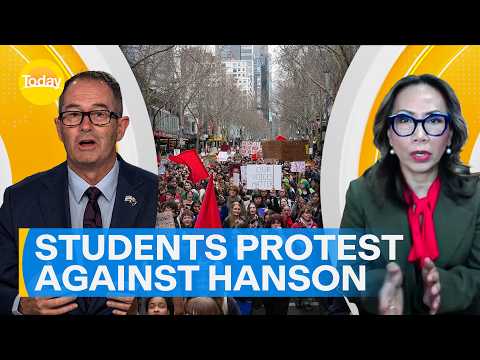
Karl Stefanovic · 2026-08-14
Thousands of students rally against Pauline Hanson | 9 News Australia

Friendlyjordies · 2026-08-13
What on Earth was this all about?

Pauline Hanson's Please Explain · 2026-08-12
Pauline Hanson responds to Student Protests
Serious Danger (Tom Ballard) · 2026-08-08
237: How to make the Greens cut through ft. Jim Casey

The Politic · 2022-07-21
Abortion: The Body Politic - The Storytellers [Bonus]
Subscribe free
Don't miss next week's edition
Sunday email delivery with the briefing snapshot and a link to the latest Policy Blog post.
Get the weekly briefing by email
One email per week with divergences, bills, and plain-English analysis.
Next you will choose email style and confirm communications. Unsubscribe or change style any time from each briefing.